Stratum
RoleCreative Developer
ToolsThree.js, TypeScript, ADS-B, Cloudflare Workers
Index01 / 16
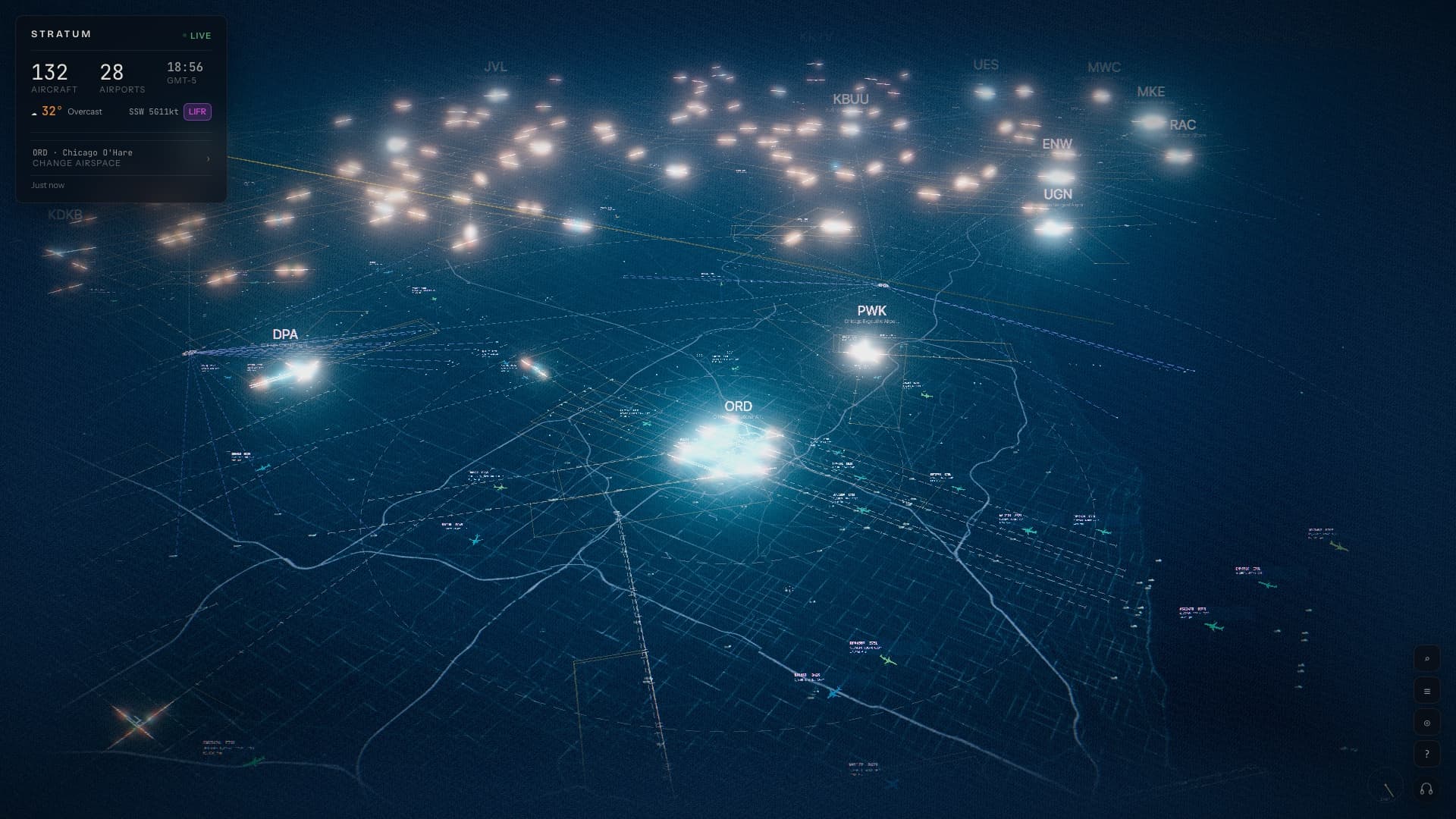
A real-time ADS-B flight tracker rendered as a 3D airspace. Stratum plots live aircraft, airports, and weather over a night-lit map — a control-tower view of the sky you can pan, tilt, and search.
Live Airspace
Stratum runs live below. Every aircraft you see is a real transponder ping — pan, tilt, and click an ident to lock onto a flight.
What is Stratum?
Every commercial aircraft broadcasts its position, altitude, and heading over ADS-B, dozens of times a minute. Most trackers flatten that stream into a 2D map with cartoon plane icons. Stratum keeps the third dimension. Aircraft climb and descend through a tilted, night-lit 3D scene; airports glow as hubs; departure and arrival tracks fan out as colored trails. It reads less like a map and more like the view from a tower.
The Interface
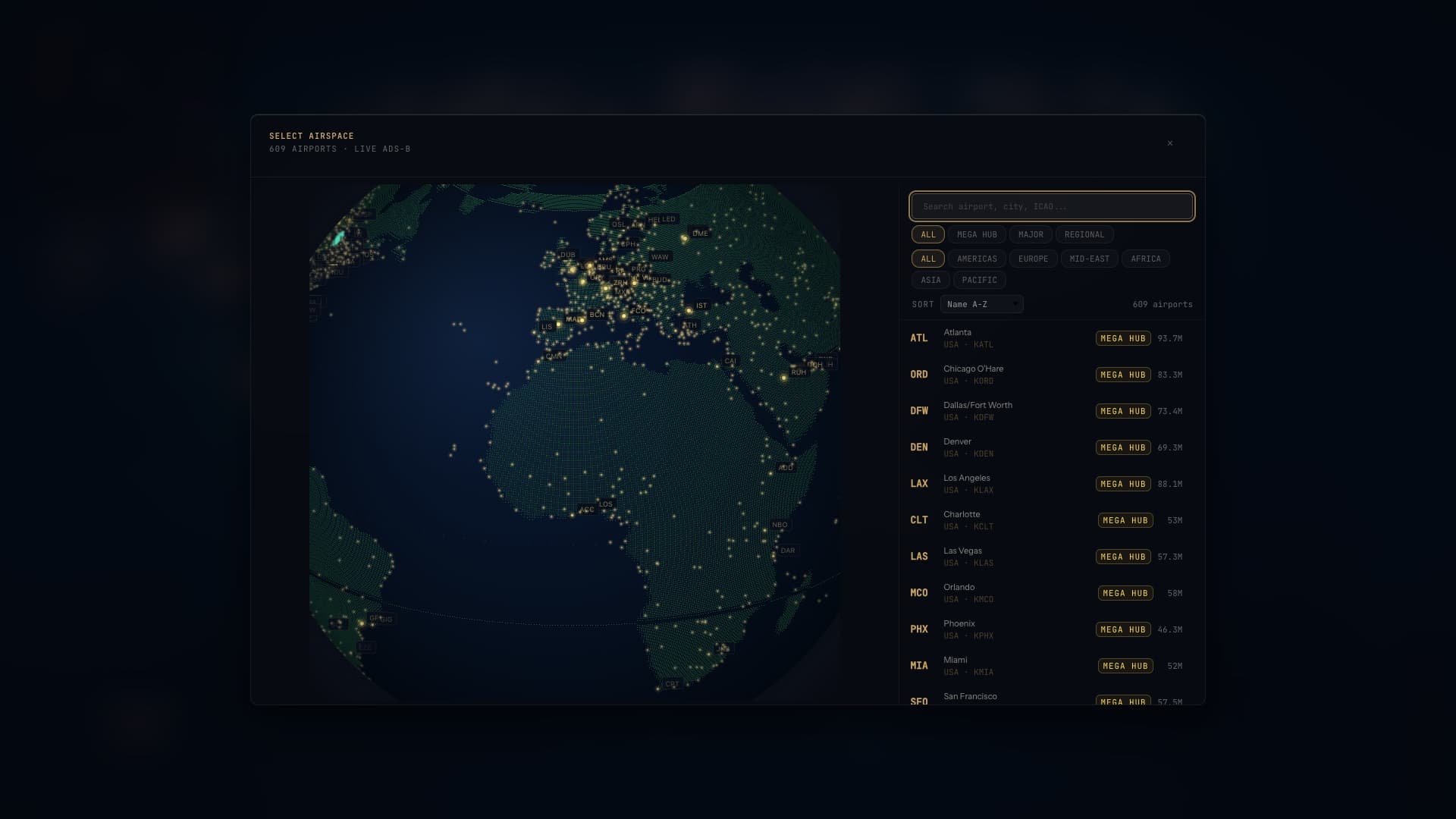
**Status panel** — aircraft count, airports in view, local time, and a live METAR block: temperature, sky condition, wind, and flight-rules category (VFR through LIFR). **Airspace switcher** — jump between hubs. The default view is Chicago O'Hare, with the surrounding satellite fields (PWK, DPA, UGN, ENW) in frame. **Flight data** — select an aircraft to open its telemetry: altitude, ground speed, heading, vertical speed, indicated and true airspeed, Mach, squawk, and flight phase. **Search** — press / to find a flight by callsign, ICAO hex, or registration.
Design Philosophy
The palette is deliberately low-key: deep navy ground, white hubs, and a handful of hue-coded trails. Data density is high, but hierarchy is strict — the busiest airport is always the brightest object in the scene. When the data feed drops, Stratum says so plainly and retries on its own. A tracker should never quietly show stale positions.
Stack
Three.js for the 3D scene, TypeScript throughout. Live positions from an ADS-B feed, weather from METAR reports. Deployed on Cloudflare Workers so the edge serves both the app and the data proxy.
Tools Used
Creative Technology · 2025